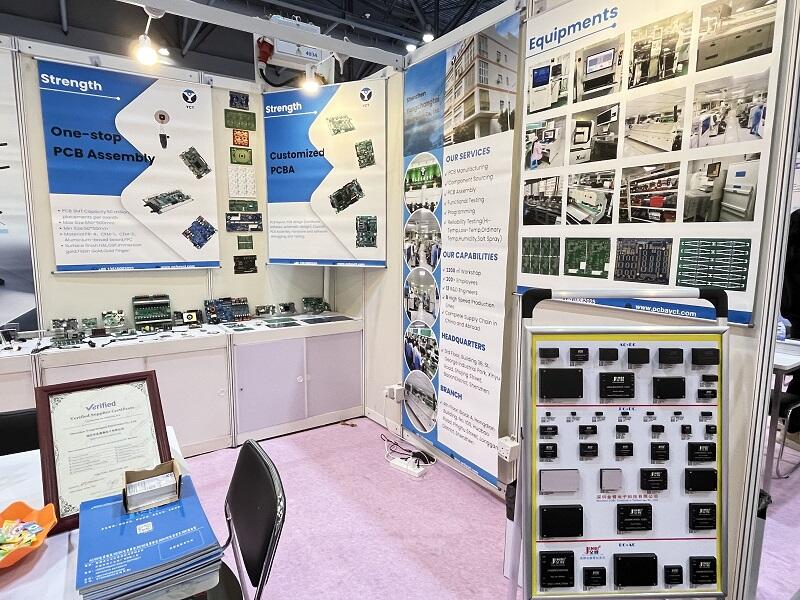
PCBA production refers to the large scale manufacturing of printed circuit board assemblies, designed to meet the demands of mass market electronic products. This process involves optimizing every stage from component sourcing to final testing to ensure efficiency, cost effectiveness, and consistent quality. Component sourcing in PCBA production is managed through established supply chain networks. Production facilities work with authorized distributors and manufacturers to procure components in bulk, leveraging economies of scale to reduce costs. They maintain strict inventory control using just in time (JIT) systems to minimize stock holding costs while ensuring components are available when needed. BOM management is critical, with software solutions used to track component availability, manage substitutions, and prevent obsolescence issues that could disrupt production. Manufacturing in PCBA production is highly automated, with high speed assembly lines capable of placing millions of components per hour. These lines are equipped with advanced pick and place machines that can handle a wide range of component types and sizes, along with reflow and wave soldering systems optimized for high throughput. Lean manufacturing principles are applied to eliminate waste, reduce cycle times, and improve overall equipment effectiveness (OEE). This includes standardized work processes, quick changeover techniques for different product models, and real time production monitoring to identify and address bottlenecks. Quality control in PCBA production is a systematic process involving multiple inspection and testing stages. Incoming material inspection verifies component quality and compliance, while in process checks monitor solder paste thickness, component placement accuracy, and soldering parameters. Automated optical and X ray inspection systems are used to detect defects early, reducing the cost of rework. Final testing includes ICT, FCT, and sometimes burn in testing to ensure the PCBs can withstand prolonged operation. Statistical process control (SPC) is employed to monitor process stability and make data driven improvements, ensuring a low defect rate (often below 50 parts per million). PCBA production facilities also offer scalability, able to handle production runs from a few thousand to millions of units. They invest in modular equipment that can be reconfigured for different product types, making them flexible enough to support multiple clients and product lines. Logistics and supply chain management are integrated into the production process, with services such as kitting, packaging, and global shipping available to ensure timely delivery to clients worldwide. For industries like consumer electronics, automotive, and telecommunications, PCBA production is essential for bringing products to market at scale. The combination of advanced automation, strict quality control, and efficient supply chain management allows manufacturers to produce high quality PCBs at competitive prices, meeting the demands of a global marketplace.
 EN
EN